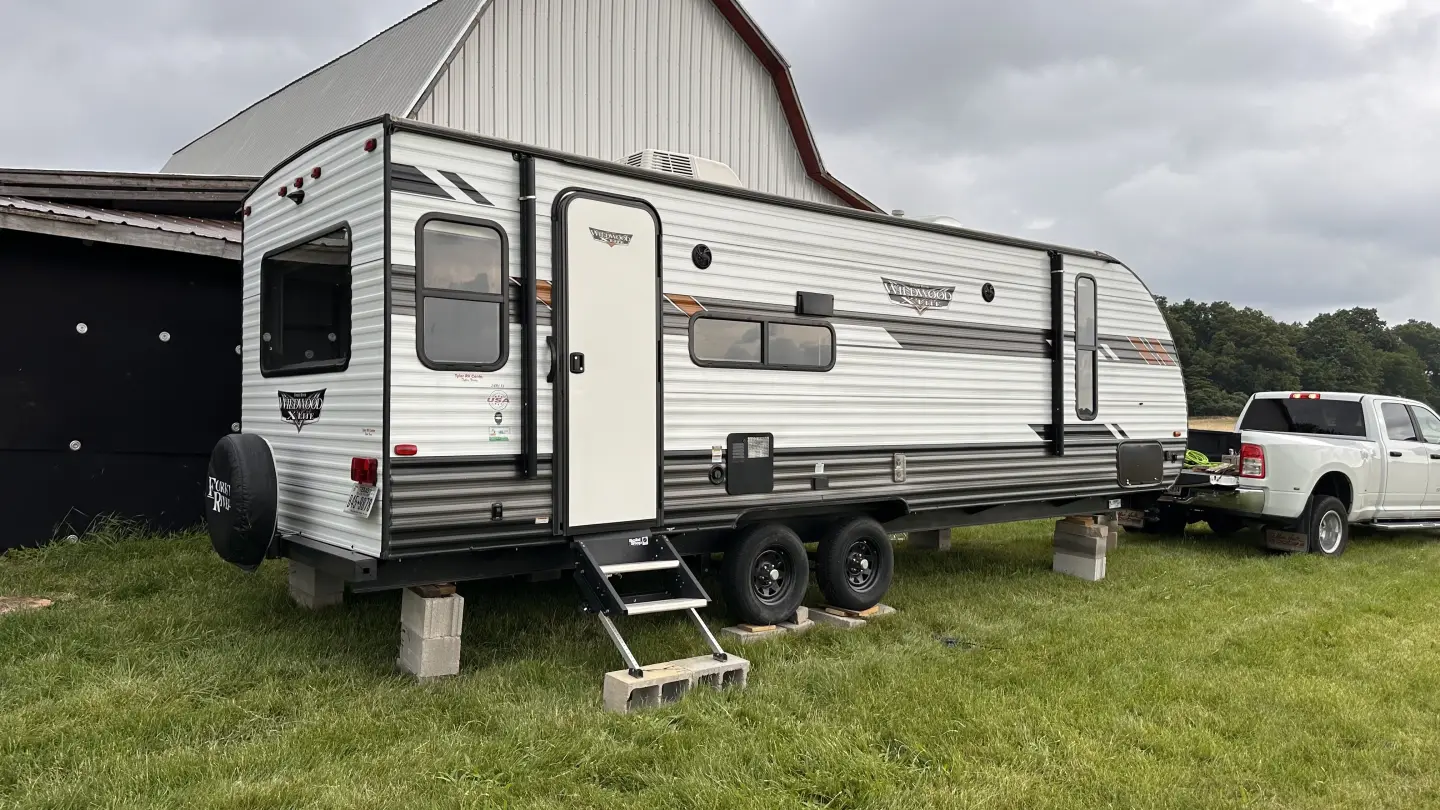
If your home in Indianapolis, Carmel, Fishers, Noblesville, Greenfield, Anderson, Martinsville, and rural Hamilton, Hancock, Madison, and Morgan counties is not livable after the August storms, you may be able to stay on your own property while it is repaired. We deliver a furnished travel trailer to your driveway or yard, set it up, have it connected, and service it for the whole stay. When a carrier approves the trailer, we can bill the carrier directly.
Local rules. Indianapolis allows one RV stay of up to 15 days a year and Carmel, Fishers, and Noblesville bar living in a parked RV; Greenfield and unincorporated Morgan County have the closest thing to a path, through a temporary permit. Each rule is linked to its official source below.
Housing a crew? Every code we found here allows construction trailers or offices on a job site, and none of them lets a crew live there. Crew rules and housing
FEMA lists Marion County, Hamilton County, Hancock County, Madison County, and Morgan County under Individual Assistance for this disaster. Households there apply for FEMA help at DisasterAssistance.gov; FEMA set October 25, 2026 as the deadline to apply in Indiana. For Marion, Hamilton, Hancock, Madison, and Morgan counties, official updates come from the Marion County Emergency Management (MESA), Hamilton County Emergency Management, Hancock County Homeland Security (Emergency Management), Madison County Emergency Management & Office of Homeland Security, Morgan County Emergency Management Agency, and Indiana Department of Homeland Security.
Checked against the sources above as of . For current information, go to the source.
What the official county, city, state, and FEMA pages stated when we read them. Each line carries its date and links its source.
Not stated on an official page. Anything not listed here was not stated on an official page we read. Ask the county emergency management agency for the latest.
Whether a trailer can stay on your lot is decided by your city or town, or by the county or township outside city limits, and by your HOA if you have one. Here is what each one’s own code or official page says, in short. Our parent brand covers the residential RV rules for Indianapolis and central Indiana in detail.
That depends on your policy and your adjuster. When a carrier approves the trailer, we can bill the carrier directly, so you are not fronting the cost. Our parent brand explains the claim side on 1st Choice Living’s Indianapolis and central Indiana page. Once the placement is arranged, the trailer, delivery, and service are ours.
Every size arrives furnished, with real beds, a full kitchen, a bathroom with a shower, and heat and air conditioning. If the work on the house runs into the cold months, read winter care and freeze protection before the first hard freeze. More on a trailer on your property while you rebuild.
We work with any temporary housing company. If one is handling your housing, ask them to place you with Temporary RV Living, or with our parent brand, 1st Choice Living, for a trailer on your own lot in Marion, Hamilton, Hancock, Madison, and Morgan counties. They send us the placement, and we deliver, set up, and service the trailer.
For restoration, roofing, tree, utility, and response crews working in Indianapolis, Carmel, Fishers, Noblesville, Greenfield, Anderson, Martinsville, and rural Hamilton, Hancock, Madison, and Morgan counties. Bring the housing to the work. We deliver travel trailers to the site, or as close as the ground allows, and set up and connect them the same way we do in a driveway. A two-person crew fits one trailer. A full crew takes a cluster, and the Workforce Bunkhouse sleeps six or more per trailer, with a kitchen and a bathroom the crew shares. One point of contact runs the placement, it lands on one invoice billed directly to the company, and we handle the LOA, COI, and compliance paperwork your office or your client requires.
No code we found in these five counties lets a crew live in trailers on a job site. Ask the planning office for the site before delivery, with the address and how long the crew expects to stay; the trailers can also go on land zoned for them nearby. More on crew housing.
Water, sewer or septic, and electrical connections are completed by licensed, insured contractors from our preferred vendor network, so you do not hire an electrician or a plumber. We look at how far the trailer will sit from the water, sewer, and power it will use, and confirm the site with you on the call before the trailer rolls.
Electric service in Marion, Hamilton, Hancock, Madison, and Morgan counties comes from the utilities below. Each posts its own outage updates.
Septic: In Morgan County, the development ordinance says an RV used while a home is being built on the same parcel must use the same address, water supply and sewage system as the home under construction. No county health department rule on hooking an RV to a septic system was found for Marion, Hamilton, Hancock or Madison counties, so call the county health department before connecting. Source: Morgan County Unified Development Ordinance, Ch. 4.C.9.h.ii(3)
Call the office for the city or town where the trailer will sit, or the county or township office outside city limits. Ask whether a travel trailer may be used there, for how long, and which permits the hookups need.
Answer a few questions in the request form and a rep calls you back with a written quote, or call (214) 493-1515.
Our sister brand LossMap covers documenting a property from the air for a claim, on LossMap’s Indianapolis and central Indiana page.
Not for long under the code we found. The Indianapolis and Marion County zoning code says a parked RV may not be used for living, sleeping, or housekeeping for more than one stay of up to 15 days per calendar year, and it has no storm or rebuilding exception. If your property is in a mapped floodplain, Indianapolis also asks owners to contact its flood team before starting repairs. Ask the city before anyone moves in.
All three development ordinances bar living or sleeping in a parked RV. Carmel allows a visiting RV for up to 10 days a month, and Noblesville allows one visiting RV for up to 10 days in a row and 14 days a year. None has a storm or rebuilding exception, so ask the city before anyone moves in.
Greenfield's development ordinance lets an RV be parked temporarily, with a temporary certificate of occupancy, as part of a program run by a unit of government or another temporary use the Board of Zoning Appeals approves. Unincorporated Morgan County allows an RV while a single-family home is built on the same parcel, with a temporary use permit and a building permit, but it does not say whether repairing a damaged home counts. Ask the planning office in either place first.
Not under any code we found. Indianapolis, Carmel, Fishers, Noblesville, Greenfield, and the counties allow construction trailers or offices on a job site, and none of them lets workers live in them; Anderson bars using an RV as a residence on commercial or industrial property. Ask the planning office for the site before delivery.
We deliver, set up, and service trailers nationwide, and have since 2004. Put the address in the request form and we confirm the site with you on the call.
Official pages and official code hosts, checked October 17, 2026. Rules can change after a storm; the office that wrote the rule has the final word.
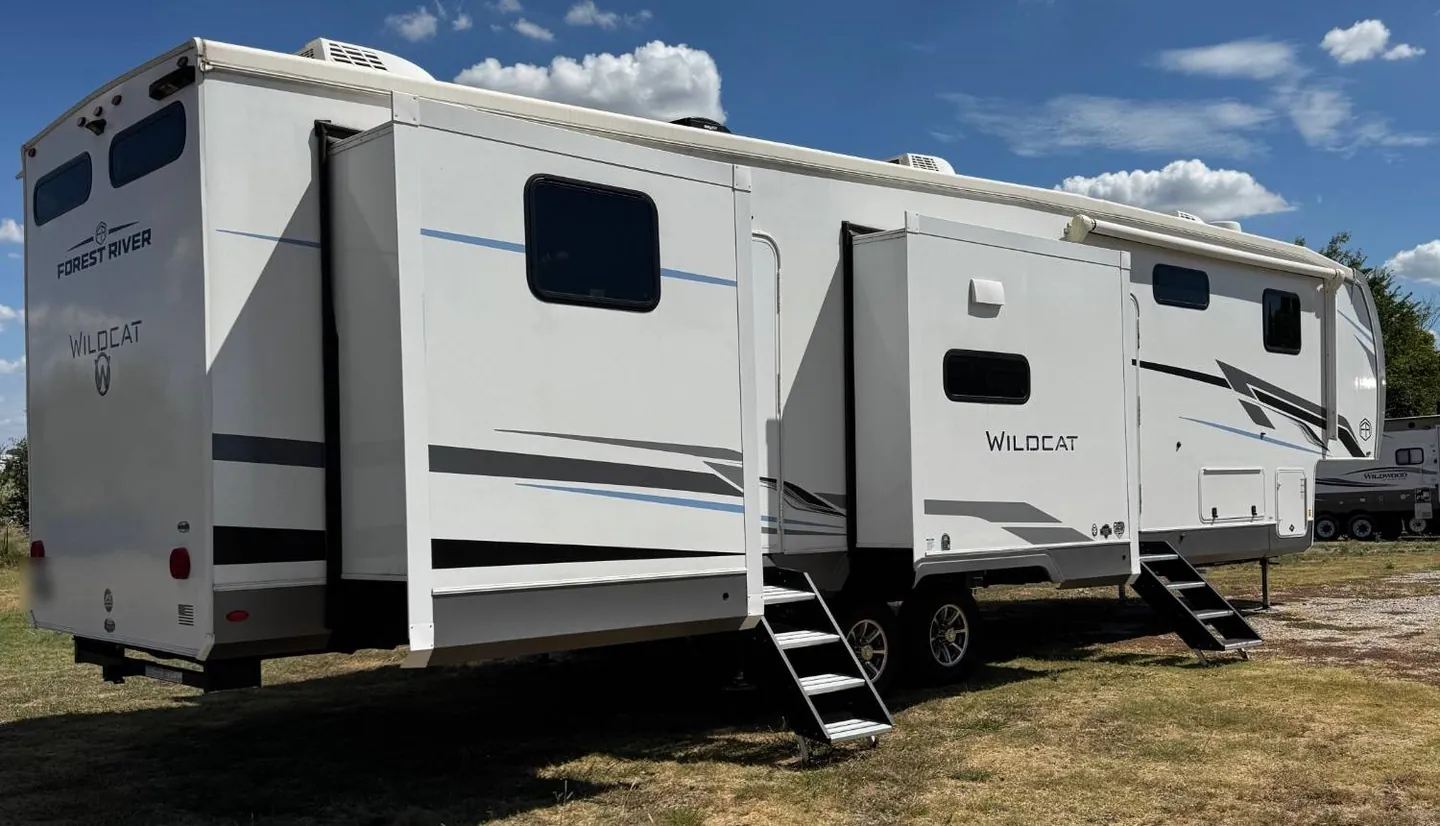
For your family or a crew, answer a few questions and a rep calls you back with a written quote.