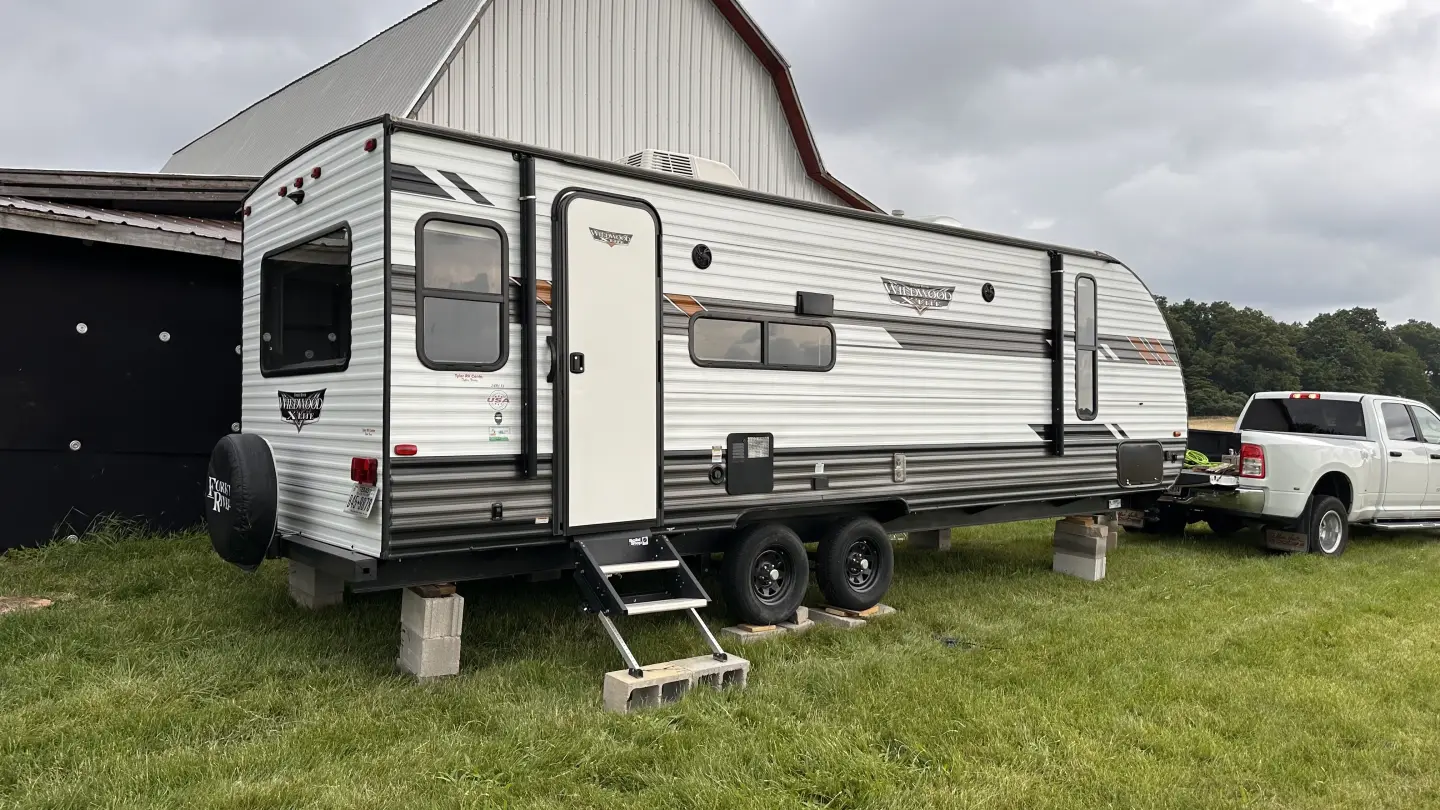
Usually, yes. In most places it is allowed as a temporary use tied to the rebuild, often through a temporary permit that runs with the building permit for the house. The decision belongs to your city, or your county outside city limits, and to your HOA if you have one. It is not ours, and it is not your adjuster’s.
Once you have the go-ahead, we deliver the trailer, level it, have the water, sewer, and power connected by licensed contractors, and service it while you live in it.
Get every yes you need before delivery day.
If the rebuild is part of an insurance claim, your adjuster decides what the policy pays for. That is a separate question from whether the trailer is allowed on the lot.
A house under construction may not have power, water, and sewer all working. Water, sewer or septic, and electrical connections are completed by licensed, insured contractors from our preferred vendor network.
Living on a holding tank takes a few habits. Our Help Center covers toilet and black tank care and winter freeze protection.
The full delivery story is on delivery and setup, and daily life is on living in a travel trailer.
We list a rule only when the city’s own code states it, with the link. None of the codes we checked says whether a travel trailer may be lived in on a residential lot during a rebuild, so the building or planning department has that answer. Checked October 9, 2026.
The code bars parking a recreational vehicle between the house and the street from 7 p.m. to 7 a.m., allows one in a side or rear yard behind an opaque fence or wall, and lets the chief building official make exceptions for construction. It does not address living in one, so check with the building department.
The code requires a recreational vehicle parked on a residential lot in public view to sit on a driveway or other improved surface. It does not address living in one, so check with the building department.
Check with the city’s building or planning department.
Check with the city’s building or planning department.
Check with the city’s building or planning department.
Check with the city’s building or planning department.
Usually, yes, with permission. Most places treat it as a temporary use tied to the rebuild, approved by the city or county and allowed by your HOA if you have one. The local rule decides, so ask the building or planning department before the trailer is delivered.
Often, yes. Where it is allowed, it is commonly tied to an active building permit for the house and ends when the work is finished. Some places use a separate temporary permit, and some do not allow it at all. Your building department will tell you which applies.
Licensed, insured contractors from our preferred vendor network complete the water, sewer or septic, and electrical connections as part of setup. You do not have to hire anyone or do it yourself.
Tell us on the call. We look at how far the trailer will sit from the water, sewer, and power it will use, and confirm the site with you before the trailer rolls. Some cities set their own rules for this, so ask yours too.
That depends on your policy and your adjuster. When a carrier approves the trailer, we can bill the carrier directly, so you are not fronting the cost. The claim side is explained by our parent brand, 1st Choice Living.
Housing during a Texas insurance claim, including how a trailer on your own lot fits with additional living expense coverage, is explained by our parent brand on temporary housing in Texas from 1st Choice Living. Once the placement is arranged, the trailer, delivery, and service are ours.
Answer a few questions and we take it from there.