Powered by
Emergency Housing Response Nationwide·(214) 493-1515
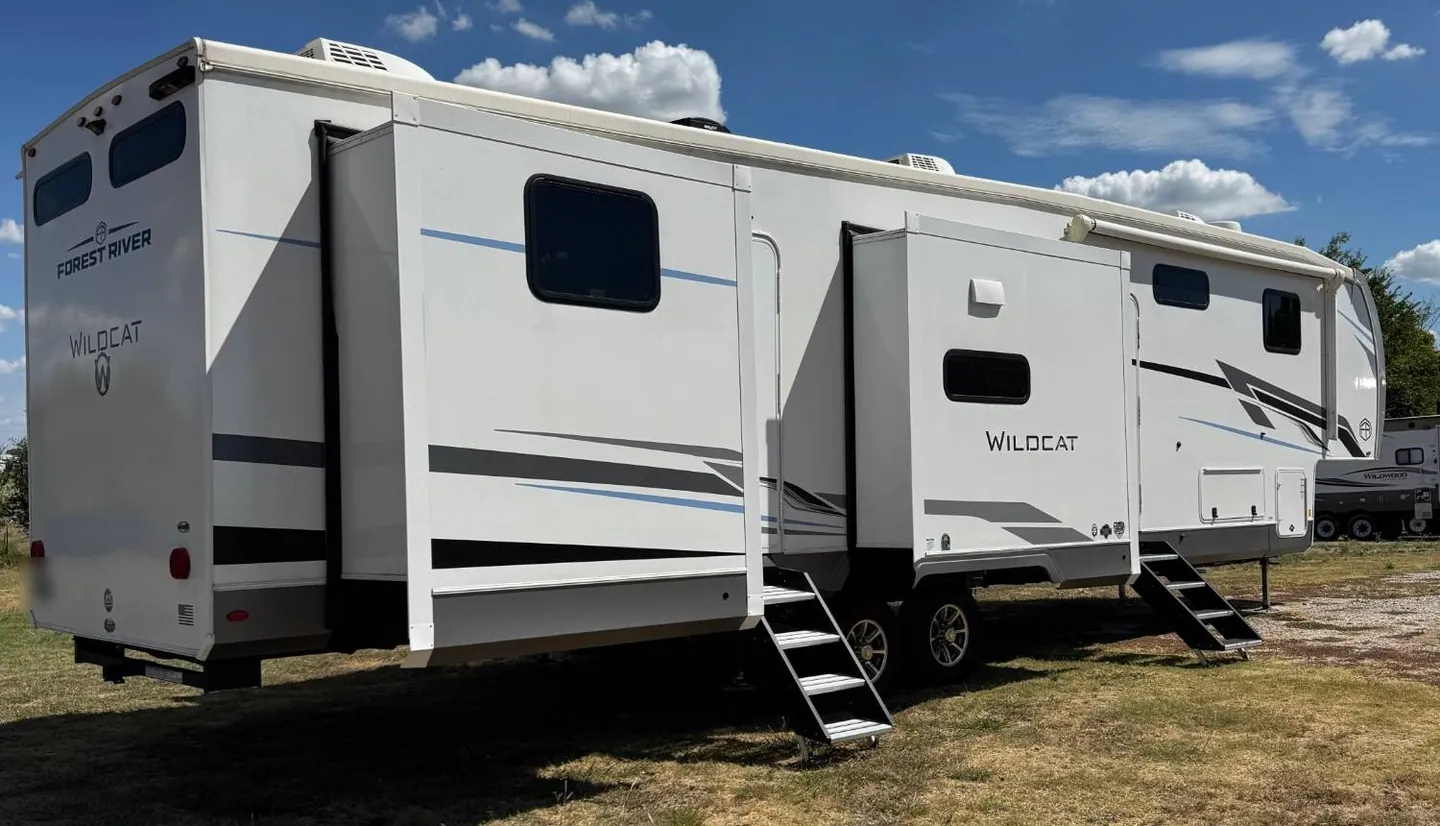
A Forest River Wildcat fifth-wheel trailer set up on grass with its slide-outs open and steps down
Safety

Travel Trailer Safety Checklist
for Families

Go through this list on your first day in the trailer, then test the alarms every month. The safety steps come from the agencies listed at the bottom of the page. Anything about your own trailer is a question for the office.

Smoke, carbon monoxide, and propane alarms

  • Find each alarm. The Texas Department of Insurance says an RV should have smoke alarms near the kitchen and sleeping areas, a carbon monoxide (CO) alarm, and a propane leak detector.
  • Test the smoke and CO alarms every month. The CPSC says to test both monthly, and the U.S. Fire Administration says the same for smoke alarms.
  • If the smoke alarm goes off while you cook or shower, never take the battery out. The U.S. Fire Administration says to open a window or door, press the hush button, and wave a towel at the alarm.
  • If the CO alarm sounds, get everyone outside and call 911. Never ignore it.
  • Treat a propane alarm the same as the smell of gas. The steps are below.
  • If you cannot find an alarm, it chirps, or it will not test, call the office about your trailer.

The emergency exit window and two ways out

  • Know two ways out: the door and the emergency exit window. The Texas Department of Insurance says everyone should know two ways out, including the escape windows.
  • Find the exit window and look at how its latch works. If you are not sure how it opens, or it looks stuck, call the office about your trailer.
  • Keep the door, the steps, and the exit window clear. Do not block them with furniture or bags.
  • Pick a meeting place outside and practice getting out with everyone in the family.
  • The U.S. Fire Administration says that once the smoke alarm sounds, you may have less than 2 minutes to get everyone outside.

The fire extinguisher and the kitchen

  • Know where the fire extinguisher is. If you cannot find one, call the office about your trailer.
  • The Texas Department of Insurance says an RV extinguisher should be a dry chemical type that can put out electrical and oil fires, and to check it monthly.
  • The U.S. Fire Administration says to use it only on a small fire, after everyone is alerted and 911 is called, with a clear way out. Otherwise, get out and call 911.
  • Remember PASS: Pull the pin, Aim low at the base of the fire, Squeeze the lever slowly, Sweep side to side.
  • The Texas Department of Insurance says most fires start in the kitchen. Do not leave the kitchen while you cook, and do not smoke inside the trailer.

Extension cords and generators

  • Plug major appliances straight into a wall outlet. The U.S. Fire Administration says an extension cord used with one can overheat.
  • Do not overload outlets or power strips.
  • Replace worn or damaged extension cords right away, and keep cords out from under rugs.
  • A space heater goes in a wall outlet, never an extension cord or a power strip, the CPSC says.
  • Run a generator outside only, at least 20 feet from the trailer, with the exhaust pointed away. Never run one in a shed or other enclosed space (CPSC). Let it cool before refueling (Ready.gov).
  • Do not connect a generator to the trailer’s own power hookup. Call the office about your trailer first.

If you smell propane

Propane smells like rotten eggs, and it is heavier than air, so it can collect along the floor. If you smell it, or the propane alarm sounds, the Railroad Commission of Texas says to do this right away:

  1. Put out cigarettes and any other open flame.
  2. Get everyone out of the trailer.
  3. Do not use light switches, appliances, the thermostat, or a phone on the way out.
  4. Close the gas shutoff valve on the propane tank or cylinder.
  5. Call the fire department (911) from a cell phone away from the trailer, or from a neighbor’s phone. Then call the office.
  6. Do not turn the propane back on or go back inside, even if the smell fades, until a qualified propane technician or emergency responder says it is safe.

Never light a pilot if you smell gas. Never assume the smell just means the tank is nearly empty.

Kids and pets around the hitch, the steps, and the heat

  • The trailer was leveled and blocked at setup so it sits solid. Keep kids off the hitch and out from under the trailer.
  • If anything at the hitch or the blocking looks bumped or moved, call the office. Do not move the trailer or change the blocking yourself. Our drivers move our trailers.
  • Keep toys and shoes off the steps. The steps are part of one of your two ways out.
  • Watch children and pets around a space heater, the CPSC says.
  • Young children should not use a fire extinguisher, the U.S. Fire Administration says. Teach them the two ways out and the meeting place.
  • Make sure pets have food and water that has not frozen, and are not left out in the extreme cold, the National Weather Service says.

Staying through the cold months? Read living in a travel trailer in winter. More on living in a travel trailer and what comes with the trailer.

Frequently asked questions

What safety alarms should a travel trailer have?

The Texas Department of Insurance says an RV should have smoke alarms near the kitchen and sleeping areas, a carbon monoxide alarm, and a propane leak detector. If you cannot find one in your trailer, call the office.

How often should I test the smoke and carbon monoxide alarms?

Every month. The CPSC and the U.S. Fire Administration both say to test smoke alarms monthly, and the CPSC says the same for CO alarms.

What do I do if I smell propane in my travel trailer?

Put out any flame, get everyone out without touching switches or phones, and close the valve on the propane tank or cylinder. Call the fire department from a cell phone away from the trailer, then call the office. Do not go back in until a qualified propane technician or emergency responder says it is safe.

How do we get out of a travel trailer in a fire?

Know two ways out: the door and the emergency exit window. Keep both clear, pick a meeting place outside, and practice with the whole family. The U.S. Fire Administration says you may have less than 2 minutes once the smoke alarm sounds.

Can I run a generator next to my travel trailer?

Only outside, at least 20 feet from the trailer, with the exhaust pointed away, and never in a shed or other enclosed space. Do not connect it to the trailer’s own power hookup; call the office about your trailer first.

Something on this list missing or not working?

Call the office or open a service request about your trailer.